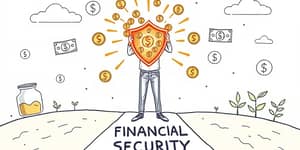
Remember the humble piggy bank?
It symbolized a simpler time, where saving a few coins felt like a triumph.
Today, as we approach 2026, financial landscapes have grown far more complex, leaving many feeling adrift in a sea of economic challenges.
A staggering 32% of Americans now expect their personal finances to worsen in the coming year.
This marks the highest level of pessimism since 2018.
In contrast, only 34% anticipate improvement, down from 44% the previous year.
This shift cuts across political lines, highlighting a universal concern.
The Modern Financial Landscape: A Sea of Challenges
Inflation remains a dominant force, with CPI hitting 3% in September 2025.
Prices have surged by about 25% since 2020, outpacing stagnant household incomes.
This mismatch fuels widespread anxiety and financial strain.
Key concerns driving this pessimism include:
- Continued high inflation, cited by 78% of respondents.
- Political actions impacting the economy.
- Stagnant or reduced income levels.
- Existing debt burdens, especially credit card balances.
Additionally, the rise of Buy Now, Pay Later services introduces new risks.
In 2025, 25% of BNPL usage was for groceries, up from 14% in 2024.
Worryingly, 42% of users made late payments, indicating potential debt traps.
These factors contribute to only 31% of U.S. households being "financially healthy."
Why Habits Are the Antidote to Pessimism
Despite the gloom, reasons for optimism shine through.
Many point to personal financial habits as transformative tools.
For those expecting better finances, key drivers include:
- Rising income, highlighted by 47% of optimists.
- Better spending habits, adopted by 40%.
- Reducing debt, a focus for 37%.
- Growing savings and investments, noted by 30%.
This underscores a critical truth: proactive habits can shift outcomes.
Goal-setting trends reveal a hopeful narrative.
In 2026, 97% of those with New Year's resolutions have financial objectives.
Moreover, 70% are actively considering or setting such goals.
A proactive 44% plan to address them immediately.
Core Financial Habits to Cultivate Now
Experts recommend foundational habits that build resilience.
These are not just theories; they are practical steps for daily life.
Start by integrating these into your routine:
- Track your spending meticulously to gain clarity on cash flow.
- Automate savings into high-return accounts for effortless growth.
- Begin investing early, even with small amounts, to harness compound interest.
- Use credit responsibly, avoiding high-cost debt like credit cards.
- Build emergency funds to cushion against unexpected expenses.
Adopting these habits can gradually improve financial health.
For example, pay down debt, a top goal for 19% of Americans.
This is especially crucial for seniors facing credit card APRs near 20%.
Evidence That Financial Literacy Works
Studies confirm that education directly enhances financial outcomes.
School-based programs boost knowledge, attitudes, and behaviors.
State-mandated courses lead to more saving and fewer late payments.
Key impacts include:
- Knowledge improvements with a 0.2 standard deviation effect.
- Behavioral changes, such as better budgeting, with a 0.10 SD effect.
- In workplace settings, increased retirement participation and contributions.
A meta-analysis of 76 randomized trials shows large knowledge effects.
It also highlights medium behavior effects, particularly in saving and credit.
However, success depends on well-crafted curricula and teacher quality.
Not all programs yield the same benefits, but evidence is strong.
For the Next Generation: Start Early
Financial habits should begin in childhood, beyond piggy banks.
Early exposure through school programs sets a lifelong foundation.
Benefits for youth include:
- Improved financial knowledge and decision-making skills.
- Healthier attitudes towards money and risk.
- Better self-reported behaviors, like saving and budgeting.
A 12-week training program saw budgeting success jump from 1 to over half of students.
This demonstrates that targeted education can yield significant results.
Parents and educators play a vital role in reinforcing these lessons.
By normalizing money talks, we reduce stigma and build confidence.
Adapting to 2026: Trends to Embrace
The financial landscape is evolving, with new trends shaping habits.
In 2026, focus on integrating these innovations into your strategy.
Key emerging trends include:
- Automated savings tools that prioritize returns over loyalty.
- Loud budgeting, or open discussions about money to normalize financial health.
- Year-round financial checkups, shifting from annual reviews to ongoing assessments.
These trends support sustained well-being rather than one-off resolutions.
For instance, loud budgeting encourages sharing wins and struggles.
This fosters a supportive community and reduces isolation.
Year-round checkups allow for timely adjustments to spending and saving.
Taking Action: A Practical Roadmap
Turning insight into action requires a clear plan.
Start by assessing your current financial state honestly.
Then, implement steps gradually to build momentum.
Consider this roadmap:
- Set specific, achievable goals, like saving for emergencies or reducing debt.
- Use apps or tools to automate tracking and savings.
- Educate yourself through reliable resources or courses.
- Engage in community discussions to stay motivated.
- Schedule regular check-ins to monitor progress and adapt.
Prioritize high-cost debt, as it compounds quickly.
For example, credit card balances carried by 46% of users need attention.
Low-cost financial education programs offer cost-effective solutions.
They yield medium to large effects on knowledge and behavior.
Conclusion: From Pessimism to Empowerment
The journey from financial uncertainty to stability is within reach.
By cultivating strong habits, we can navigate the challenges of 2026.
Embrace proactive steps and leverage evidence-based strategies.
Remember, small, consistent actions lead to significant change over time.
Start today, and transform your financial future with confidence and hope.
References
- https://www.bankrate.com/banking/financial-outlook-survey/
- https://eric.ed.gov/?id=EJ1175630
- https://www.axios.com/sponsored/5-financial-trends-you-can-bank-on-in-2026
- https://cepr.org/voxeu/columns/financial-education-effective-and-efficient
- https://www.mapscu.com/blogs/money-trends-2025/
- https://www.financialeducatorscouncil.org/impact-of-financial-literacy/
- https://www.vectrabank.com/personal/community/two-cents-blog/Save-Smarter-in-2026/
- https://www.experian.com/blogs/news/about/money-lessons-from-2025/
- https://www.brookings.edu/articles/financial-literacy-what-works-how-could-it-be-more-effective/
- https://www.investmentnews.com/practice-management/americans-aim-high-financially-in-2026-but-sticking-to-plans-may-be-the-real-test/263708
- https://excelined.org/2025/03/04/financial-literacy-education-in-the-united-states-landscape-analysis-and-next-steps/