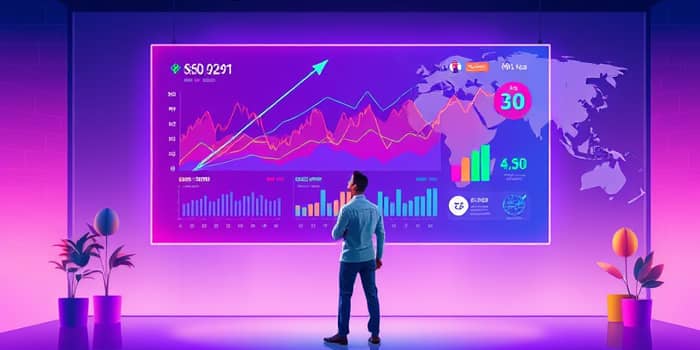
In the complex world of investing, economic indicators serve as crucial signposts that can guide your financial decisions and shape your portfolio's future. Understanding these signals is essential for navigating market fluctuations and achieving long-term success.
These indicators reflect the economy's health and directly influence asset prices by signaling growth, inflation risks, and recession probabilities. By mastering their meanings, you can anticipate trends and adjust your investments proactively.
This article will explore the key economic indicators, their types, historical impacts, and practical strategies for portfolio adjustment. Empower yourself with knowledge to make smarter investment choices in any economic climate.
The Role of Economic Indicators in Investing
Economic indicators are statistics that provide insights into the economic performance of a country or region.
They help investors assess the current state and future direction of the economy, which in turn affects stock markets, bond yields, and other financial assets.
By monitoring these indicators, you can identify opportunities and risks early, allowing for timely adjustments to your portfolio.
For instance, rising GDP often signals a bullish market, while high inflation may prompt a shift to defensive assets.
Types of Economic Indicators: Leading, Coincident, and Lagging
Economic indicators are categorized based on their timing relative to the economic cycle.
Leading indicators predict future trends, coincident indicators confirm the current state, and lagging indicators validate past trends.
- Leading Indicators: These include stock market performance, consumer confidence index, and yield curve.
- They provide early warnings of economic shifts, such as a rising stock market preceding growth.
- Coincident Indicators: Such as GDP and employment levels, these offer real-time snapshots of the economy.
- A sharp drop in industrial production can signal immediate contraction, prompting strategy reevaluation.
- Lagging Indicators: Like inflation and unemployment rates, they confirm trends after they occur.
- High unemployment, for instance, validates a recession, affecting equity valuations and policy responses.
Understanding these types helps you interpret data accurately and plan accordingly.
A Closer Look at Key Economic Indicators
To make informed decisions, it's important to understand the specifics of major indicators.
Here are some of the most critical economic indicators to watch:
- Gross Domestic Product (GDP): Measures total economic output and growth.
- Consumer Price Index (CPI): Tracks inflation levels and purchasing power.
- Unemployment Rate: Indicates labor market health and consumer spending potential.
- Interest Rates: Set by central banks to control money supply and economic activity.
- Consumer Confidence Index: Reflects public sentiment and future spending trends.
- Manufacturing PMI: Gauges industrial activity and expansion or contraction.
- Housing Indicators: Signal construction and real estate trends affecting broader confidence.
- Yield Curve: Predicts economic turning points, especially recessions when inverted.
Below is a table summarizing key economic indicators, their definitions, signals, and portfolio impacts.
This table provides a quick reference for how each indicator affects your investments. Use it as a guide to interpret economic data and adjust your portfolio accordingly.
Historical Lessons: Learning from the Past
History offers valuable insights into how economic indicators drive market movements.
By examining past events, you can better prepare for future scenarios and avoid common pitfalls.
- 2008 Financial Crisis: GDP contracted by 2.5% in 2009, unemployment surged, and stock markets like the S&P 500 lost over 50%.
- This period highlighted the importance of monitoring lagging indicators like unemployment for recession confirmation.
- 2020 Pandemic: Stocks dropped 30% in early 2020, with initial deflation followed by rising inflation in 2021.
- Quick fiscal stimulus led to a rapid recovery, showing the impact of policy responses on economic indicators.
- 1970s Stagflation: High inflation combined with economic stagnation crushed equities.
- This era emphasized the need for inflation hedges, such as commodities, in portfolios during volatile times.
These examples demonstrate that economic indicators are not just numbers; they are narratives that shape investment outcomes and require careful analysis.
Impacts on Different Asset Classes
Economic indicators affect various asset classes differently, requiring tailored strategies for equities, bonds, and sectors.
For equities, growth in GDP and moderate inflation typically lift stock prices, while high rates and unemployment can drag them down.
Cyclicals like industrials thrive in expansion phases, whereas defensives like utilities offer stability during downturns.
Bonds are sensitive to interest rate changes; high rates lower yields and values, whereas low rates boost bond prices.
Adjusting duration is key in rate-sensitive environments to manage risk and returns effectively.
Sectors respond uniquely to economic signals, and understanding this can enhance your portfolio diversification.
- Tech and AI: Benefit from growth environments and innovation trends, offering long-term returns.
- Healthcare: Driven by aging demographics in developed markets, providing steady demand.
- Industrials and Infrastructure: Gain from fiscal spending initiatives, especially during economic recoveries.
- Utilities: Offer stability and consistent dividends during economic uncertainties.
- Financials: Often profit from rising interest rates, as they can charge more for loans.
- Commodities: Serve as hedges against inflation, crucial for resource-rich economies like Australia.
Understanding these impacts helps in building a resilient portfolio that can weather economic cycles and capitalize on sector-specific opportunities.
Monetary and Fiscal Policy Responses
Governments and central banks use policies to influence the economy, which in turn affects indicators and markets.
Monetary policy, set by central banks like the Federal Reserve, involves adjusting interest rates to control inflation and stimulate growth.
For example, rate cuts can boost investment during recessions, while hikes may cool down an overheating economy.
Fiscal policy, through government spending and taxation, can directly impact GDP by funding projects like infrastructure.
These responses create ripple effects across global markets, influencing trade relationships and currency values.
Global factors also play a role, such as demographic trends where emerging markets with young populations offer growth opportunities.
Aging societies may focus more on healthcare and retirement sectors, shaping long-term investment themes.
Practical Strategies for Portfolio Adjustment
To effectively use economic indicators, adopt a structured approach to portfolio management.
Start by monitoring trends regularly through reliable sources like central bank reports and economic calendars.
Adjust your asset allocation based on indicator signals, such as shifting to defensives during high inflation periods.
Scenario planning is crucial; stress-test your portfolio for different economic scenarios to ensure resilience.
Avoid behavioral biases by relying on data over emotions, using indicators to maintain discipline in volatile markets.
- Monitor Trends Regularly: Keep an eye on key indicators like GDP and inflation to spot early opportunities or risks.
- Adjust Asset Allocation: In a high-rate environment, reduce exposure to real estate and add financials for better returns.
- Scenario Planning: Test your portfolio against recessions or booms to prepare for various outcomes.
- Avoid Behavioral Biases: Use indicators to counteract loss aversion and other psychological traps.
- Holistic View: Combine macroeconomic analysis with sector insights and global policies for a comprehensive strategy.
Tools like tracking central bank announcements and volatility indices can enhance your decision-making process. Stay informed and adaptable to navigate the ever-changing economic landscape and protect your investments.
By integrating economic indicators into your investment process, you can make more informed decisions, mitigate risks, and capitalize on opportunities.
Remember, knowledge is power in the financial markets, and understanding these signals can be your key to long-term success and financial security.
References
- https://beckcapitalmgmt.com/economy/what-is-the-potential-impact-of-economic-indicators-on-your-portfolio/
- https://www.ssga.com/us/en/intermediary/insights/how-economic-factors-impact-asset-performance
- https://www.fnb.co.za/blog/investments/articles/InvestorEducation-2024_03_14/?blog=investments&category=Latest&articleName=InvestorEducation-2024_03_14
- https://www.wealthwithin.com.au/learning-centre/investing-and-wealth-creation/the-impact-of-economic-indicators-on-your-investments
- https://www.pimco.com/us/en/resources/education/learning-the-significance-of-key-economic-indicators
- https://www.dbs.id/id/treasures/articles/makna-indikator-ekonomi-untuk-portofolio-anda
- https://www.rosenbergresearch.com/2025/07/10/investment-market-strategies-how-using-macroeconomic-signals-can-help-you-make-better-investment-decisions/
- https://site.financialmodelingprep.com/education/other/Economic-Indicators-Every-Investor-Should-Know--FMP
- https://www.onpointcu.com/blog/the-impact-of-global-economic-trends-on-personal-investments/
- https://advisor.visualcapitalist.com/visual-guide-to-economic-indicators/
- https://www.schwab.com/learn/story/tracking-lesser-known-economic-indicators
- https://www.cmegroup.com/insights/economic-research/2025/economic-indicators-that-most-impact-markets.html