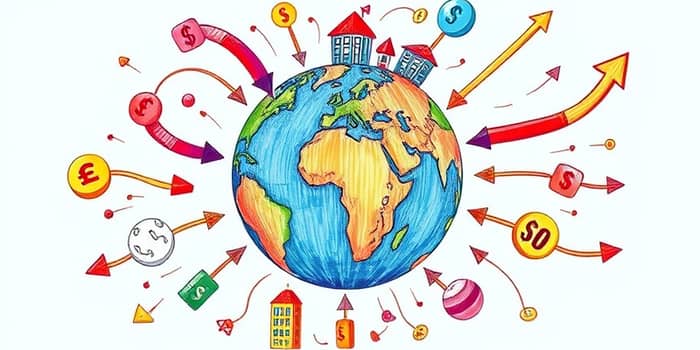
In today's interconnected world, few forces shape our financial landscape as profoundly as interest rates. They serve as a key economic lever that central banks wield to guide economies toward stability and growth.
By influencing borrowing costs and spending patterns, rates touch every aspect of our lives. From the loans we take for homes to the returns on our savings, their impact is both personal and global.
Grasping this concept is not just for experts; it's a vital skill for anyone aiming to secure their financial future. This knowledge can help you adapt to economic shifts and optimize your money management strategies effectively.
The Economic Engine: How Interest Rates Stimulate Growth
When central banks lower interest rates, they aim to stimulate growth by making borrowing cheaper. This encourages a surge in economic activity across various sectors.
Consumers find it more affordable to finance major purchases, such as homes or vehicles. Businesses seize the opportunity to invest in expansion and new projects.
The ripple effects are substantial, often boosting GDP by 0.5-0.8% for every 1% cut in rates. This growth is fueled by increased consumer spending, which accounts for about 70% of GDP in developed nations.
- Cheaper borrowing for big-ticket items like real estate and automobiles
- Increased business investment in equipment and hiring
- Higher consumer confidence leading to more discretionary spending
- Enhanced job creation and economic productivity
These dynamics create a virtuous cycle of prosperity. Lower rates can lead to a more vibrant economy with boosted corporate earnings and improved market conditions.
The Balancing Act: Higher Rates and Inflation Control
Conversely, when inflation threatens economic stability, central banks may raise interest rates. This move helps to curb demand and cool down overheating markets.
Higher borrowing costs discourage excessive spending and investment. This restraint can reduce GDP growth by approximately 0.6% per 1% rate hike.
The primary goal is to maintain price stability, often targeting an inflation rate around 2%. By tightening monetary policy, authorities aim to prevent runaway prices.
- Reduced consumer spending on non-essential goods and services
- Conservative business plans and potential layoffs
- Lower risk-taking in financial markets
- Improved savings yields for fixed-income investors
This approach involves trade-offs, such as benefiting savers while challenging borrowers. It requires a delicate balance to avoid tipping the economy into recession.
Your Wallet on the Line: Consumer and Personal Finance Effects
Interest rates directly affect your disposable income and spending habits. Lower rates mean lower loan payments, freeing up money for other uses.
This can foster optimism and encourage big-ticket purchases. In contrast, higher rates reduce disposable income, slowing down consumption.
Key factors include the availability of credit and psychological confidence. During low-rate periods, credit card usage often increases as borrowing becomes more attractive.
For loans, variable-rate products like mortgages and credit cards become costlier when rates rise. In 2026, mortgages could average around 6.1%, below recent highs but still significant.
On the savings side, high rates make products like GICs more competitive. This benefits retirees and those relying on fixed income.
- Adjust spending based on rate trends to maximize disposable income
- Consider fixed-rate loans for stability during volatile periods
- Diversify savings into high-yield accounts when rates are high
- Monitor credit card debt to avoid escalating costs
Being proactive can help you navigate these shifts and protect your financial health.
Business Dynamics: Investment and Employment Ripples
Businesses are highly sensitive to interest rate changes. Lower rates enable equipment upgrades and expansion plans.
This can lead to increased hiring and supply chain growth. The resulting activity boosts demand for goods and services, reinforcing economic cycles.
When rates are high, companies may delay investments and adopt conservative strategies. This can result in layoffs and reduced market competitiveness.
The effects extend beyond individual firms to entire industries. For example, construction and manufacturing often thrive with low rates due to cheaper financing.
- Prioritize capital expenditures during low-rate environments
- Build cash reserves to weather high-rate periods
- Explore alternative funding sources like equity financing
- Focus on efficiency improvements to offset borrowing costs
By adapting to rate fluctuations, businesses can sustain growth and contribute to broader economic resilience.
Financial Markets: Stocks, Bonds, and Currencies
Interest rates have a profound impact on financial markets. They influence asset prices and investment returns across the globe.
For stocks, lower rates often lead to higher valuations due to improved earnings. Conversely, higher rates can dampen stock performance by reducing corporate profitability.
Bonds see price movements inversely related to rate changes. This affects portfolios heavily weighted in fixed income.
Currency values shift with rate differentials, influencing international trade. A strengthen currency can make exports more expensive but imports cheaper.
Understanding these dynamics can help investors adjust their strategies. For instance, favoring equities in low-rate environments and fixed income when rates are high.
Central Banks: The Architects of Rate Policy
Central banks, such as the Federal Reserve, play a critical role in setting interest rates. They use tools like the federal funds rate to influence short-term borrowing costs.
This rate affects prime rates and Treasury yields, rippling through the economy. Authorities monitor inflation, employment, and growth data to make informed decisions.
Fiscal policies, including government spending and money supply changes, also impact rates. For example, printing money can lower rates but risks inflation.
Recent actions include rate hikes in 2022 to combat inflation, followed by easing in 2024-2025. The policy rate in the US is now around 3.5%, a three-year low.
- Adjust the federal funds rate to manage economic cycles
- Coordinate with other central banks for global stability
- Use forward guidance to shape market expectations
- Balance inflation control with growth objectives
Their decisions require a nuanced approach to avoid economic overheating or recession.
Looking Back and Forward: Historical Context and 2026 Outlook
Historically, interest rates have fluctuated with economic cycles. The 2022 hikes were a response to inflation surges, demonstrating their inflation control power.
Recent easing has seen rates drop in the US, UK, and Eurozone. For instance, the UK base rate was cut to 3.75% in late 2025.
Looking ahead to 2026, forecasts suggest cautious normalization. Markets predict the US Fed rate could fall to around 3%, with similar trends in other regions.
Key forecasts for 2026 include:
- US Fed rate: ~3% by end-2026, down from 3.5%
- UK BoE rate: ~3.25%, reflecting gradual cuts
- Eurozone ECB rate: Stable around 2%
- US mortgage rates: Averaging 6.1%
Factors like high debt levels and geopolitical tensions may limit aggressive rate cuts. This implies a tighter policy environment compared to pre-pandemic times.
Forward rates, such as Euribor and SOFR, provide additional insights. For example, Euribor 1-month is projected at 1.971% in September 2026.
Navigating the Landscape: Practical Tips for You
To make your money work effectively, consider these strategies in light of interest rate trends. Start by monitoring economic indicators like inflation reports and central bank announcements.
Adjust your investment portfolio based on rate environments. In low-rate periods, focus on growth assets like stocks; in high-rate times, consider fixed-income options.
For personal loans, lock in fixed rates if you expect increases. This can provide stability and predictability in your finances.
Build an emergency fund to cushion against economic downturns. High-yield savings accounts can be beneficial when rates are elevated.
Stay informed about global rate movements, as they affect currency and trade. This knowledge can help in planning international purchases or investments.
- Review and refinance debt during low-rate cycles
- Diversify investments across asset classes to mitigate risk
- Consult financial advisors for personalized advice
- Educate yourself on economic fundamentals to make informed decisions
By embracing these practices, you can enhance your financial resilience and capitalize on opportunities presented by rate changes.
Interest rates are more than just numbers; they are powerful tools that shape our economic destiny. From stimulating growth to controlling inflation, their influence is pervasive.
Understanding this role allows you to take charge of your financial journey. Whether you're saving, investing, or borrowing, a keen awareness of rates can lead to better outcomes.
As we move into 2026, staying adaptable and informed will be key. The economic landscape may shift, but with the right knowledge, you can navigate it successfully.
Remember, your financial well-being is intertwined with these global dynamics. By making smart choices, you can ensure that your money works as hard as you do.
Let this understanding inspire you to plan proactively and build a secure future. The power of interest rates is in your hands to harness for personal and collective prosperity.
References
- https://www.rosenbergresearch.com/2025/05/23/the-impact-of-interest-rates-on-the-economy/
- https://blog.investengine.com/interest-rates-2026-uk-us-europe/
- https://www.bankatfirst.com/personal/discover/flourish/why-are-interest-rates-rising.html
- https://www.global-rates.com/en/
- https://www.ciro.ca/office-investor/investing-basics/interest-rates-and-how-they-impact-your-finances
- https://tradingeconomics.com/country-list/interest%20rate
- https://dechtmanwealth.com/insights/blog/how-interest-rates-impact-the-economy
- https://www.bankrate.com/personal-finance/interest-rates-forecast/
- https://www.federalreserve.gov/faqs/why-do-interest-rates-matter.htm
- https://tradingeconomics.com/country-list/interest-rate
- https://www.usbank.com/financialiq/invest-your-money/investment-strategies/how-do-interest-rates-affect-investments.html
- https://www.deloitte.com/us/en/insights/topics/economy/global-economic-outlook-2026.html
- https://www.discover.com/online-banking/banking-topics/how-does-the-federal-reserve-interest-rate-affect-me/
- https://www.ishares.com/us/insights/fed-outlook-2026-interest-rate-forecast
- https://www.kemba.org/resources/education/how-interest-rate-changes-affect-your-money