In an era where financial innovation meets digital transformation, investors are constantly seeking new avenues to grow and protect their wealth.
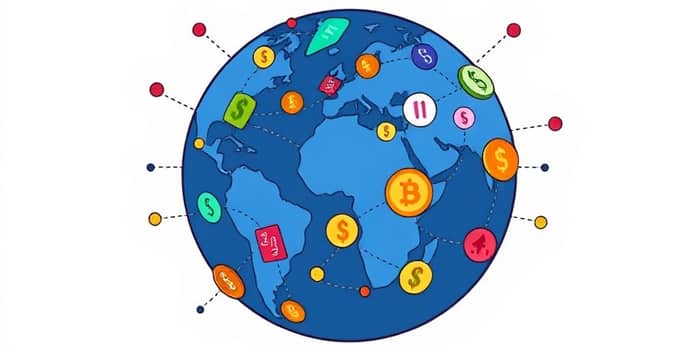
Synthetic assets are tokenized representations of real-world assets that simulate value without direct ownership, offering a gateway to unprecedented portfolio expansion.
These blockchain-based financial instruments combine the power of cryptocurrencies with traditional derivatives, allowing you to access global markets with ease and efficiency.
Imagine investing in Tesla stock, gold, or foreign currencies without the barriers of high costs or geographical restrictions—this is the promise of synthetic assets.
They democratize finance by breaking down traditional walls, making sophisticated investment strategies accessible to everyone.
As you delve into this article, you'll discover how synthetic assets can transform your approach to investing, providing practical tools to navigate modern financial landscapes.
Understanding Synthetic Assets: The Core Concept
Synthetic assets, often called synths or tokenized derivatives, are digital instruments that mimic the value of other assets.
They leverage blockchain technology and smart contracts to create transparent, decentralized representations of various asset classes.
Unlike traditional derivatives, which operate in centralized systems, synthetic assets offer greater flexibility and customization.
This means you can gain exposure to assets like commodities or stocks without physically owning them, reducing complexity and overhead.
By using collateral backing and price oracles, these assets ensure accurate market reflections, enhancing trust and security in your investments.
How Synthetic Assets Work: The Technical Mechanism
The creation of synthetic assets involves a straightforward yet powerful process driven by advanced technology.
First, users deposit crypto assets such as ETH or USDC as collateral to mint synthetic assets, ensuring stability and value backing.
Smart contracts then manage these assets, automatically tracking real-world prices through decentralized oracles like Chainlink.
This setup allows for real-time adjustments and seamless integration with global markets.
Methods for creation include centralized issuance, overcollateralization, or smart contract custodians, each offering unique benefits for portfolio management.
For instance, overcollateralization provides a safety net by requiring more collateral than the asset's value, mitigating risks in volatile conditions.
Understanding these mechanisms empowers you to make informed decisions, leveraging technology for smarter investing.
Asset Classes Available Through Synthetic Assets
Synthetic assets open doors to a diverse range of asset classes, allowing you to build a well-rounded portfolio with ease.
- Stablecoins such as USDC and sUSD, providing stability in volatile markets.
- Commodities like PAXG and sGold, offering exposure to precious metals without storage hassles.
- Cryptocurrencies including WETH and wrapped assets such as WBTC, bridging digital and traditional finance.
- Stocks such as sTSLA, synthetic Tesla stock, enabling investment in blue-chip companies.
- Financial derivatives like options, for advanced risk management strategies.
- Currencies and fiat equivalents, facilitating global trade and hedging against forex fluctuations.
This variety ensures that you can tailor your investments to match specific financial goals, whether for growth, income, or protection.
Key Benefits for Expanding Your Portfolio
Synthetic assets offer numerous advantages that can significantly enhance your investment approach.
- Increased flexibility and customization: Gain exposure to diverse assets without direct purchase, allowing for precise portfolio alignment.
- Cost efficiency: Lower transaction costs and reduced capital requirements compared to traditional assets.
- Enhanced liquidity: Trade quickly on decentralized exchanges with lower fees and spreads.
- Risk management: Hedge against market risks like currency fluctuations, protecting your portfolio from losses.
- Market access and democratization: Access restricted or expensive assets, breaking down barriers for global investors.
- Leverage potential: Amplify returns with derivatives-based exposure while controlling capital deployment.
- Portfolio diversification: Invest across multiple asset classes through a single platform, reducing concentration risk.
These benefits make synthetic assets a powerful tool for both novice and experienced investors seeking growth and security.
Practical Use Cases for Synthetic Assets
Integrating synthetic assets into your strategy can serve various practical purposes, from hedging to speculation.
- Hedging: Use synthetic equivalents to protect against losses in risky assets, safeguarding your investments.
- Arbitrage: Exploit price differences between synthetic and actual assets to generate profits efficiently.
- Speculation: Speculate on asset price movements without high fees, enabling agile market participation.
- Portfolio optimization: Manage risk and return precisely, aligning investments with long-term financial objectives.
By applying these use cases, you can adapt to market changes and capitalize on opportunities as they arise.
Risks and Challenges to Consider
While synthetic assets offer immense potential, it's crucial to be aware of the associated risks for safe investing.
- Counterparty risk: Dependence on the solvency of derivative counterparties can lead to execution issues.
- Complexity: Requires expertise in derivatives and market behavior to construct effective positions.
- Liquidity risk: Some instruments may be difficult to trade in volatile markets, affecting exit strategies.
- Market risk: Subject to price volatility and systemic shocks, just like underlying assets.
- Smart contract vulnerabilities: Bugs or flaws in technology could result in significant financial losses.
- Collateral stability: Value tied to collateral integrity, necessitating careful platform selection.
- Regulatory constraints: Restrictions in some jurisdictions may limit access or increase compliance burdens.
Addressing these challenges involves diligence and ongoing education to navigate the synthetic asset landscape safely.
Comparing Synthetic Assets with Traditional Derivatives
To better understand the value of synthetic assets, it's helpful to compare them with traditional derivatives.
This comparison highlights how synthetic assets evolve traditional concepts, offering greater efficiency and inclusivity in finance.
Future Trends in Synthetic Assets
The future of synthetic assets is bright, with emerging trends set to reshape investment landscapes.
- Decentralized Finance (DeFi): Increasing creation on blockchain platforms for global, decentralized access.
- Algorithmic trading: Advanced algorithms optimizing creation and trading strategies for enhanced returns.
- Global market expansion: Efficient access to emerging markets and restricted asset classes.
- Risk monitoring tools: Sophisticated systems improving transparency and safety in synthetic positions.
- Integration with ESG strategies: Tracking ESG-compliant benchmarks for socially responsible investing.
Staying informed about these trends can help you anticipate changes and adapt your portfolio for long-term success.
Best Practices for Implementation
To maximize the benefits of synthetic assets, follow these best practices for safe and effective use.
- Understand derivative instruments thoroughly before constructing synthetic assets.
- Assess counterparty risk to ensure reliability in derivative-based positions.
- Diversify across multiple underlying assets to reduce concentration risk.
- Use risk management tools to monitor exposure and potential losses continuously.
- Stay updated on regulatory requirements and market conditions affecting synthetic instruments.
By adopting these practices, you can navigate the complexities of synthetic assets with confidence and strategic insight.
Conclusion: Unlocking New Opportunities
Synthetic assets represent a transformative force in finance, expanding your portfolio's horizons with innovation and accessibility.
They provide a powerful tool for customized investment strategies with lower outlay and greater flexibility, enabling precise risk and return management.
As you explore this dynamic field, remember that knowledge and caution are key to harnessing its full potential.
Embrace the future of investing by integrating synthetic assets into your portfolio, and open doors to global markets with confidence and creativity.
References
- https://coinmarketcap.com/academy/glossary/synthetic-asset
- https://www.leewayhertz.com/synthetic-assets-their-significance-in-defi/
- https://koinly.io/crypto-glossary/synthetic-asset/
- https://auroratrainingadvantage.com/finance/key-term/synthetic-assets/
- https://www.bitstamp.net/en-gb/learn/blockchain/what-are-synthetic-assets/
- https://www.stonex.com/en/financial-glossary/synthetics/
- https://www.coinmetro.com/glossary/synthetic-assets
- https://www.binance.com/en/square/post/84087
- https://www.cointracker.io/learn/synthetic-asset
- https://parcl.co/blog/the-world-of-synthetic-assets
- https://www.kraken.com/learn/what-are-synthetic-crypto-assets
- https://www.lcx.com/crypto-synthetic-assets-explained/
- https://www.emurgo.io/press-news/defi-basics-synthetic-assets/